Problem
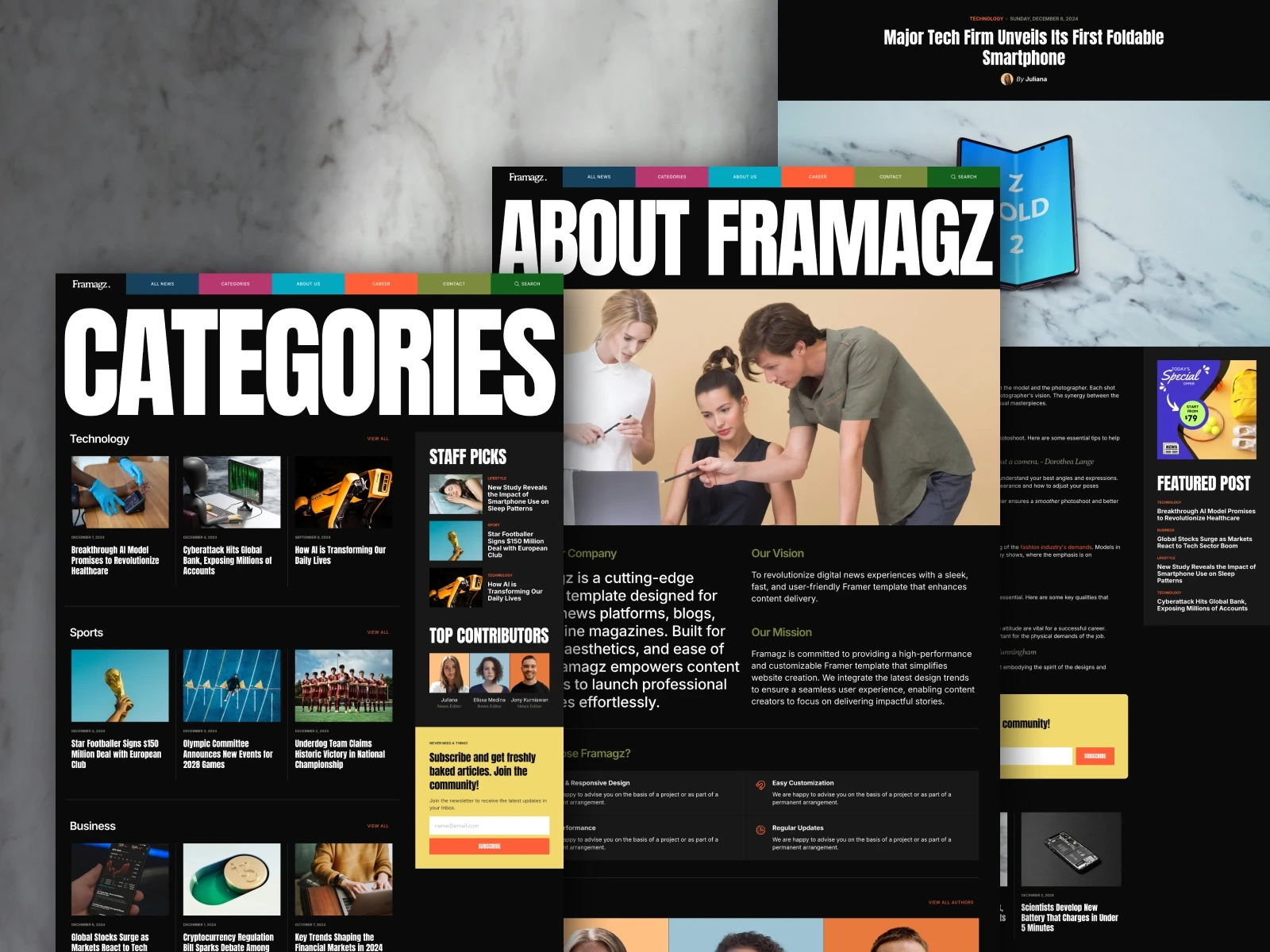
Many news and documentation sites trade clarity for style: long pages with poor hierarchy, hard-to-find archives, inconsistent article templates, and weak search. That slows reader discovery, reduces session depth, and makes editorial operations more painful.
Solution
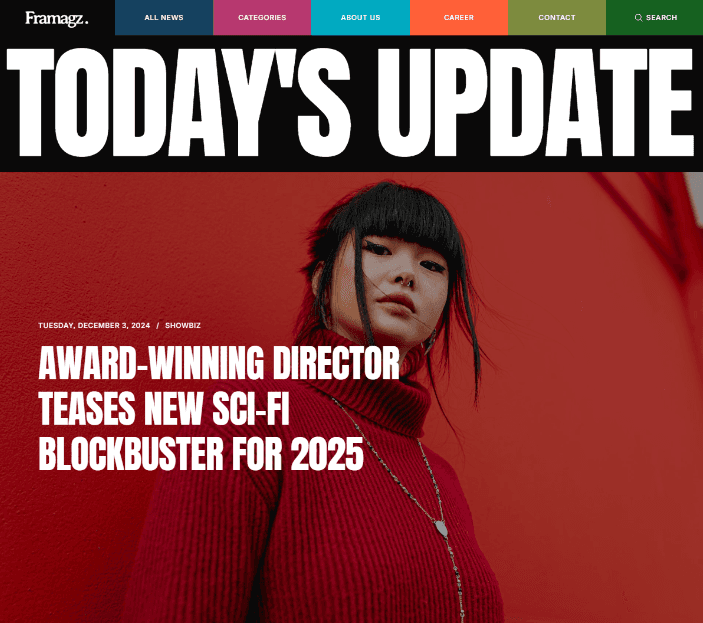
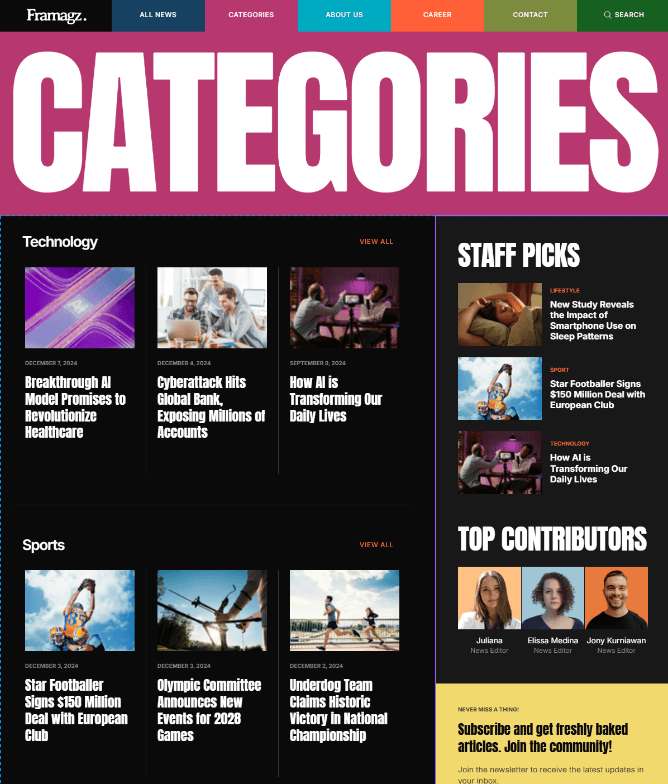
Framagz gives editorial teams a structured, content-first home. Article templates prioritise legibility and scannability, tag systems and a built-in site search surface related articles and docs, and CMS-driven workflows let editors publish, schedule, and iterate without developer help. Reading transitions and modest motion keep engagement high while keeping performance and accessibility intact. The result: faster discovery, longer sessions, and a site editors can own.
Key Features
A11y-optimised structure for inclusive reading
Automated on-page SEO foundations for discoverability
Built-in analytics for editorial insights
Framer CMS for publishing and content management
Reusable components and article templates
Subscription and submission forms for audience growth
Project styles and typographic scale for consistent publishing
Native site search and tag-driven discovery
Responsive visual breakpoints for reading across devices
Rich media support (embeds, galleries, audio, video)
Sticky navigation, reading progress, and subtle motion patterns
Ideal For
Digital newsrooms and online magazines
Editorial teams and content studios
Technical documentation and product docs
Knowledge bases and help centres
Independent writers and columnists
Thought-leadership publishers and journals
Non-profit and membership publishers
University and research publications
SaaS product docs and developer portals
Community-driven publishing platforms
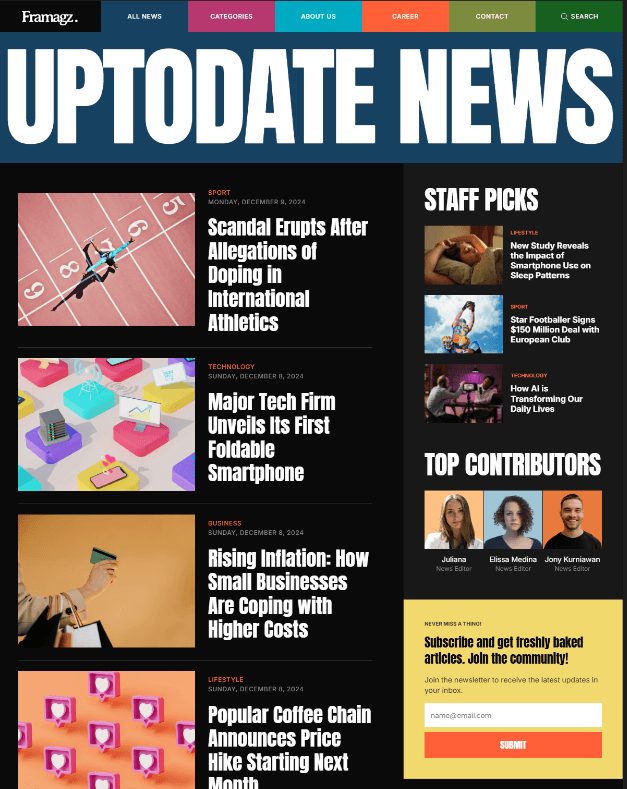
We designed Framagz around one idea: let content lead. Starting with editorial interviews and content audits, we prioritised the structures editors use most - article templates, tagging, author pages, and search. Prototypes focused on reading comfort: typographic scale, line length, and small interaction cues that guide attention without stealing it.
Building in Framer meant we could preserve motion and transitions while keeping the CMS workflow simple for day-to-day publishing. The final design helps teams publish faster, measure what matters, and keep readers coming back.