Problem
Many restaurant sites either over-emphasise style at the cost of clarity or present dense menus and unclear booking options. That leaves guests unsure how to reserve, where to find pricing or timings, and whether the experience matches their expectations - which reduces conversions and calls for more manual booking management.
Solution
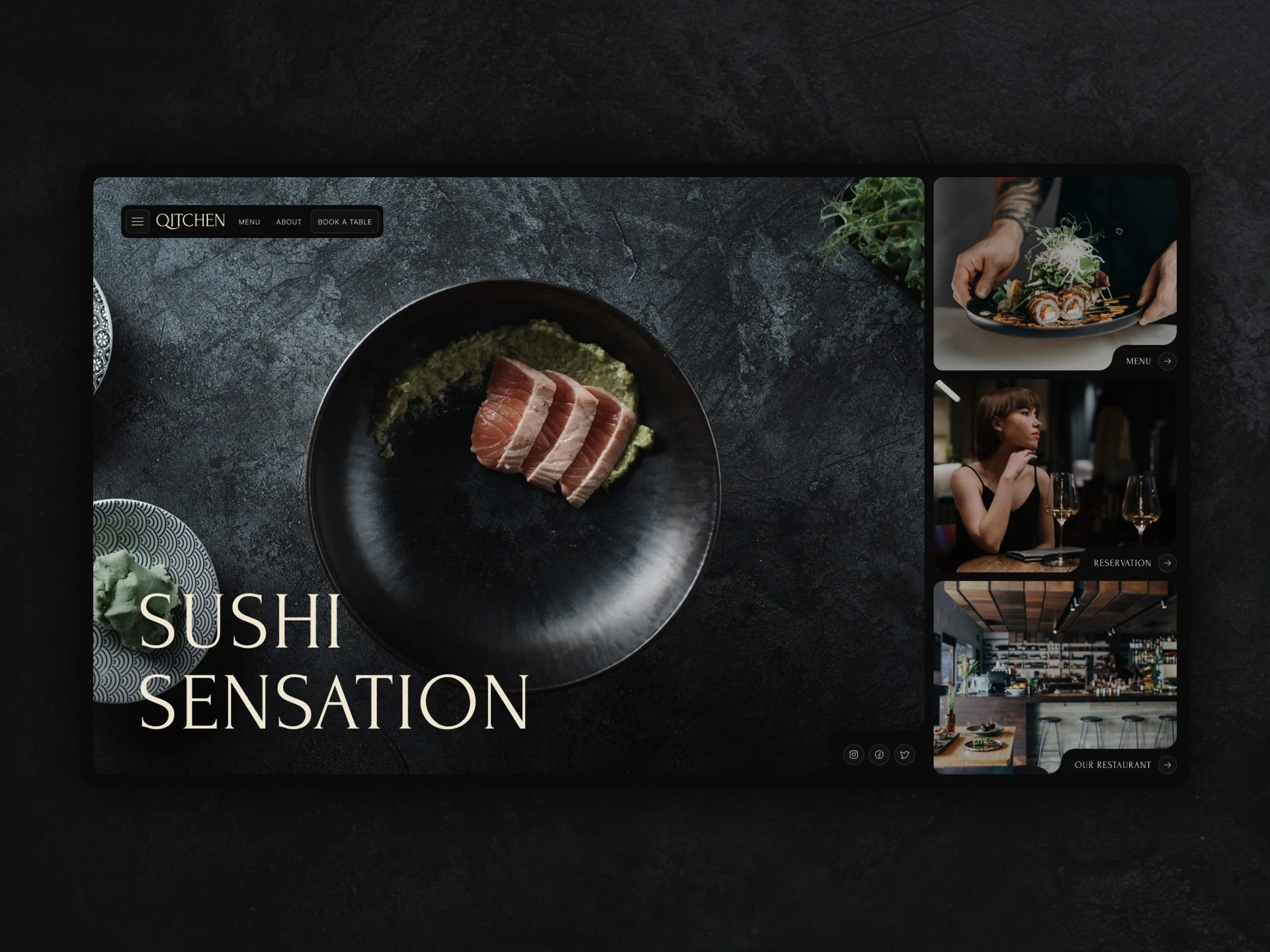
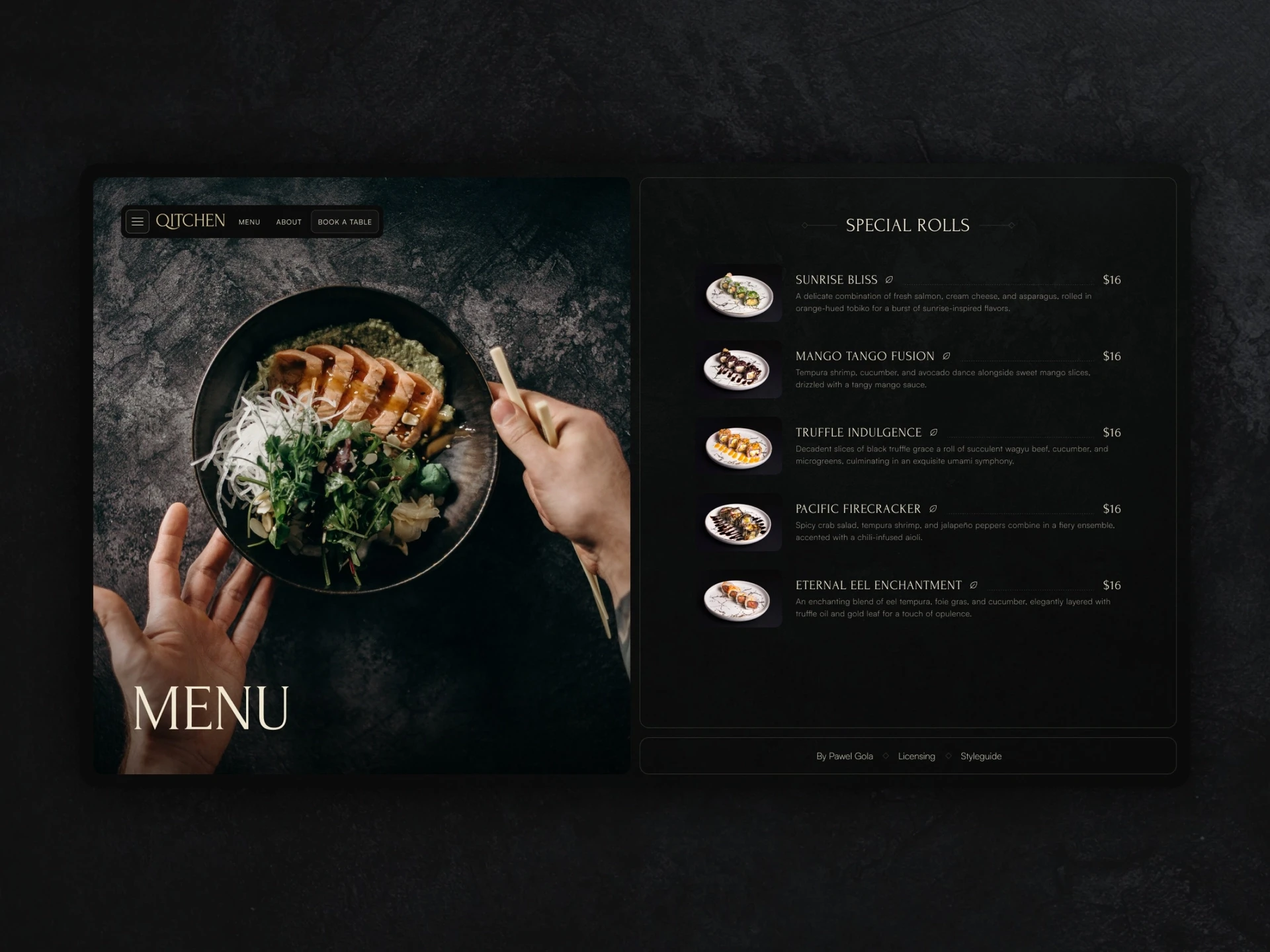
Qitchen puts guest needs first. Menus are readable and skimmable, reservation buttons remain visible as guests browse, event and private dining pages make the next step obvious. Subtle motion and rich media communicate atmosphere without slowing the site, and the CMS gives teams control over daily menus, promotions, and seasonal pages. The result is a site that feels as composed as your dining room and works as reliably as your front-of-house team.
Key Features
A11y-optimised structure for inclusive browsing
Polished animations and visual effects to showcase dishes and space
Automated SEO foundations for discoverability
Built-in analytics to measure reservations and engagement
Framer CMS for easy menu and content updates
Reusable components and layout templates for quick edits
Forms and booking integration support (reservations, events, private dining)
Overlays, modals, slideshows, and tickers for promos and specials
Project styles and visual breakpoints for consistent branding
Sticky CTAs and progressive booking flows
No-code customisation inside Framer
Ideal For
Independent restaurants and bistros
Upscale dining and fine-dining establishments
Casual cafés and coffee hubs
Bars and cocktail lounges
Food trucks and pop-up kitchens
Bakery and patisserie storefronts
Catering and private dining services
Hotel restaurants and in-house dining venues
Delivery and takeaway-focused kitchens
Culinary events and supper clubs
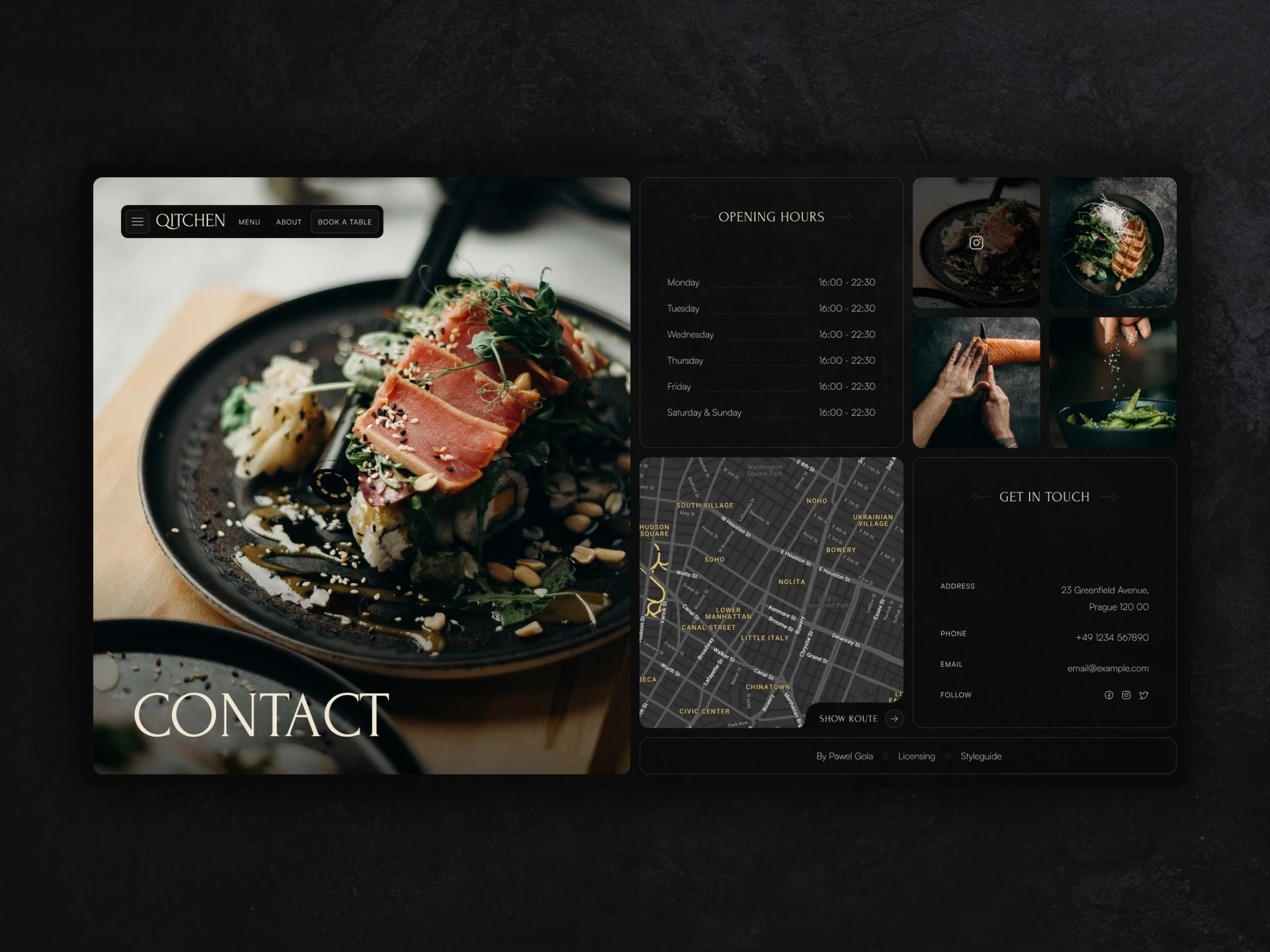
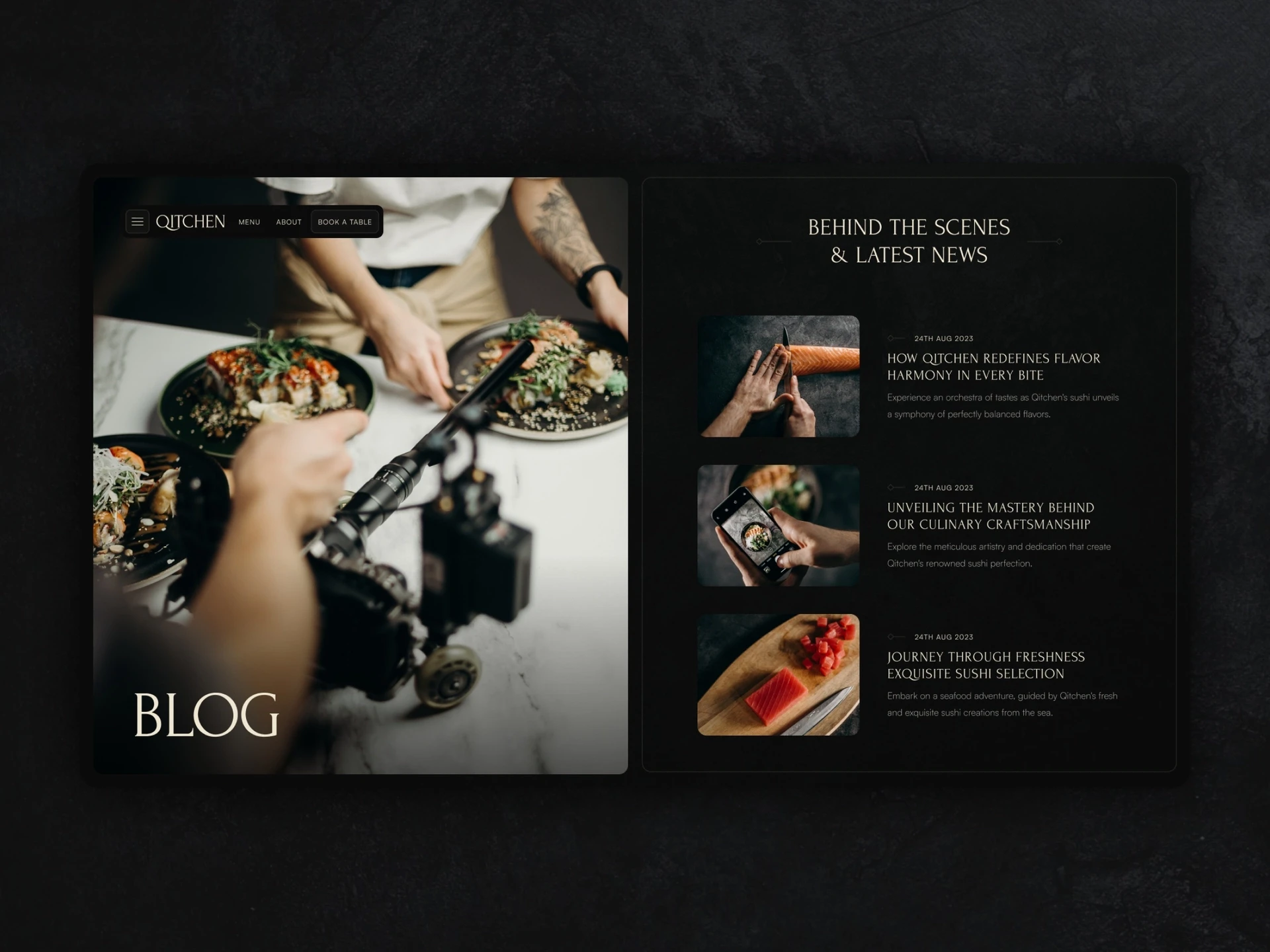
We built Qitchen from the perspective of a guest and an operator. Early workshops focused on the two questions guests ask first: “What’s on the menu?” and “How do I book?” From there we designed a hierarchy that keeps menus, reservations, and specials within easy reach. Motion and imagery were applied sparingly to communicate atmosphere without masking information.
Building in Framer let us preserve polished interactions while giving teams a CMS to update menus, open hours, and events without developer support.